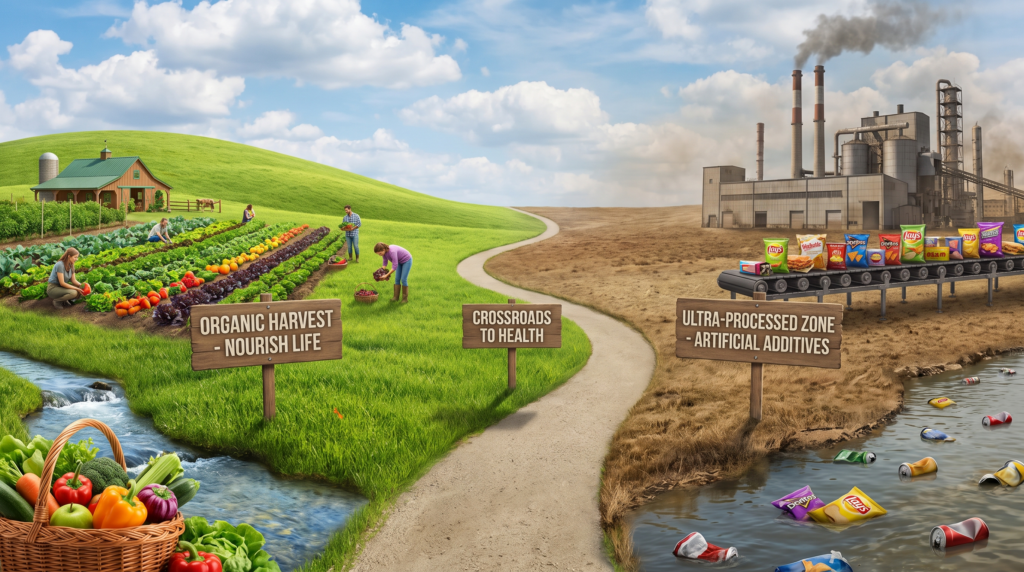
Eating organic and cutting back on processed foods isn’t about chasing a trend—it’s about protecting your long‑term health, supporting better farming practices, and reducing your exposure to substances your body was never designed to handle in large amounts.
What “organic” really means
Organic food is grown and processed under standards that:
•Restrict synthetic pesticides, herbicides and fertilisers.
•Ban or tightly limit synthetic additives, colours, preservatives and flavour enhancers in processed organic products.
•Emphasise soil health, biodiversity, crop rotation, animal welfare and lower‑impact farming practices.
It’s not perfection, and regulations differ between countries, but organic rules are generally much stricter than conventional food standards on chemicals and additives.
Why eating organic can benefit your health
Lower pesticide residues
Organic crops are grown without most synthetic pesticides, so people who eat more organic food typically carry lower levels of certain pesticide residues in their bodies. That matters because:
•Many pesticides are designed to interfere with biological systems; some are neurotoxic or endocrine‑disrupting.
•Children, pregnant people and those with chronic illnesses are more vulnerable to subtle long‑term effects.
Buying organic doesn’t mean zero exposure (pesticides drift and persist), but it can significantly reduce your personal load.
Fewer controversial additives
Certified organic packaged foods must use a far smaller list of allowed additives, and many synthetic colours, sweeteners, preservatives and flavour enhancers are excluded. Heavy intake of additives like:
•Artificial colours and certain preservatives
•Flavour enhancers and processed sweeteners
has been associated with issues ranging from hyperactivity in some children to headaches, gut upset and increased cravings. Minimising them by choosing organic, ingredient‑simple products reduces the number of “unknowns” your body has to process every day.
Better nutrient density (especially with whole organic foods)
When you choose organic versions of whole foods—vegetables, fruits, whole grains, eggs, dairy, meat—you’re often choosing:
•Food grown with healthier soil, more diverse rotations and less chemical stress.
•Plants that may invest more in natural defence compounds (antioxidants and phytochemicals) instead of being propped up by synthetic inputs.
The nutrient differences between individual organic and non‑organic items vary, but the bigger gain is this: a diet that focuses on mostly whole, minimally processed foods—organic or not—tends to have more fibre, vitamins, minerals and beneficial plant compounds than a diet based on ultra‑processed products.
The dangers of processed and ultra‑processed foods
Not all processing is bad. Freezing peas, rolling oats or fermenting yoghurt are examples of processing that can preserve or even improve food. The real problems show up with ultra‑processed foods: products built largely from refined ingredients, additives and industrial processes, far removed from how the original food looked.
Common examples include:
•Sugary breakfast cereals, bars and drinks.
•Packaged snacks, chips, biscuits and confectionery.
•Fast food burgers, nuggets, pizzas and many microwave meals.
•Highly flavoured instant noodles and sauces.
These pose several dangers when they make up a big chunk of your diet.
Excess sugar, salt and unhealthy fats
Ultra‑processed foods are engineered to be highly palatable and cheap, so they’re often loaded with:
•Added sugars (including “hidden” forms like syrups) that drive weight gain, insulin resistance and type 2 diabetes.
•Excess sodium, increasing blood pressure and cardiovascular risk.
•Refined and industrial fats (including trans fats in some regions, and high omega‑6 oils) that can worsen inflammation and heart disease risk.
Because these foods are so easy to overeat, it’s very hard to maintain healthy blood sugar, cholesterol and blood pressure when they dominate your intake.
Low fibre and weakened gut health
Most ultra‑processed products are stripped of natural fibre:
•Low fibre intake is linked to constipation, higher colon cancer risk, and poorer blood sugar and cholesterol control.
•Your gut microbiome—trillions of beneficial bacteria—thrives on diverse fibres and plant compounds, not on refined starch and sugar.
A diet heavy in processed foods starves the microbiome, which can contribute to inflammation, altered immunity, mood changes and metabolic problems.
Additives, flavour engineering and overeating
Ultra‑processed foods are carefully designed:
•Flavour enhancers, “natural flavours,” sweeteners and texture agents create products that override normal fullness signals.
•Bright colours and intense tastes keep you reaching for more, even when you’re not physically hungry.
•Emulsifiers and some preservatives may affect gut barrier integrity and microbiota, with emerging links to inflammation and metabolic disease.
Over time, your palate adapts to these intense flavours, making simple whole foods taste “boring” and pushing you towards an unhealthy baseline.
Long‑term disease risk
Large population studies consistently find that high consumption of ultra‑processed foods is associated with:
•Obesity and abdominal fat gain.
•Type 2 diabetes and metabolic syndrome.
•Cardiovascular disease and hypertension.
•Some cancers.
•Higher overall mortality.
These studies don’t prove that processed foods alone cause all these problems, but the patterns are strong enough that many public health bodies now recommend limiting them as a core prevention strategy.
Environmental and planetary benefits of eating organic and less processed
Choosing more organic and fewer processed foods doesn’t just affect your body; it affects the wider world.
Soil, water and biodiversity
Organic farming and low‑input systems:
•Focus on building soil organic matter, which improves structure, retains water and stores carbon.
•Reduce reliance on synthetic pesticides and fertilisers, lowering chemical runoff into rivers and groundwater.
•Encourage crop diversity, hedgerows, mixed farms and habitat for pollinators and beneficial species.
Healthier soils and ecosystems are more resilient to climate extremes and support more life overall.
Lower energy use and waste
Ultra‑processed foods typically require:
•Multiple processing steps, long supply chains and heavy packaging.
•More energy in factories, transport and retail storage.
•Massive volumes of single‑use plastic and other materials.
By pivoting toward simpler organic ingredients—grains, pulses, fresh produce, basic dairy and meat—you reduce demand for energy‑intensive manufacturing and cut packaging waste.
Climate impacts
Organic systems and compost‑based fertility can:
•Store more carbon in soils and perennial vegetation.
•Reduce nitrous oxide emissions linked to heavy synthetic fertiliser use.
•Encourage local, seasonal diets that shrink transport emissions.
Meanwhile, many processed foods rely on cheaply grown commodity crops (like corn, wheat, soy, sugar) produced in high‑input monocultures that degrade soil and emit more greenhouse gases. Eating closer to the farm and closer to the plant helps reduce that pressure.
Making this practical in everyday life
You don’t have to be perfect or buy only organic to get real benefits. Focus on direction, not strict rules:
•Prioritise organic for foods where pesticide exposure is highest or you eat them very often (leafy greens, berries, apples, grapes, baby foods).
•Shift your meals toward whole foods: vegetables, fruits, whole grains, nuts, seeds, beans, eggs, and modest amounts of quality meats and dairy.
•Keep ultra‑processed foods (soft drinks, packaged snacks, fast food, sugary cereals, instant noodles) as occasional treats rather than staples.
•Cook simple meals at home more often; even basic home cooking usually means less sugar, salt, additives and packaging than store‑bought equivalents.
•Read ingredient lists: shorter, recognisable ingredients are usually better; long lists of additives and refined components are a red flag.
Think of it this way: every time you swap a highly processed product for a more natural, ideally organic food, you’re voting for your own health and for a food system that’s kinder to soils, water, animals and the climate.