Compost is at the heart of organic farming—and one of the simplest, most powerful tools we have for healing depleted soils, cutting waste, and supporting a healthier planet.
What compost is
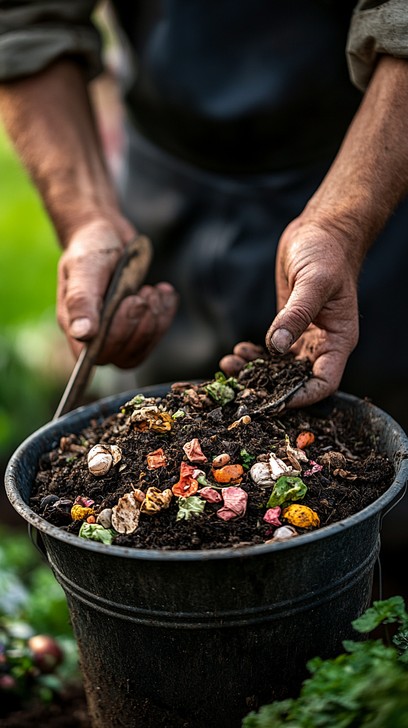
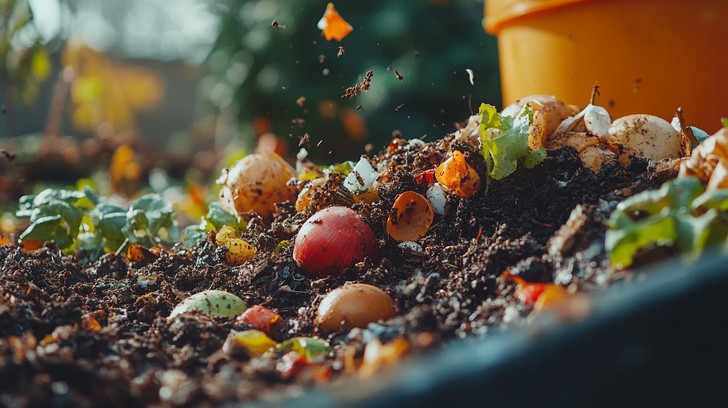
Compost is decomposed organic matter made from things like food scraps, manures, leaves, straw and plant residues.
Microorganisms—bacteria, fungi, and others—break these materials down into a stable, dark, crumbly substance rich in humus.
In organic farming, compost is both a fertiliser and a living soil conditioner, improving almost every aspect of soil health.
Benefits for soil fertility
Compost feeds the soil so the soil can feed the plants:
•Provides a broad spectrum of nutrients (nitrogen, phosphorus, potassium, trace minerals) in slow‑release form rather than rapid, leachable doses.
•Increases cation‑exchange capacity (CEC), helping soil hold and exchange nutrients effectively.
•Reduces the need for synthetic fertilisers and supports nutrient cycling within the farm: residues and wastes become tomorrow’s fertility.
Because nutrients are released gradually, crops are less prone to “boom and bust” growth and more resilient to stress.
Improved soil structure and water management
Compost transforms how soil behaves physically:
•Helps bind soil particles into stable aggregates, improving tilth and reducing compaction.
•In sandy soils, it boosts water‑holding capacity; in heavy clays, it improves drainage and aeration.
•Reduces surface crusting, encouraging better root penetration and seedling emergence.
This means fields handle droughts and heavy rain better: compost‑rich soils absorb water like a sponge, store it for roots, and allow excess to drain, reducing erosion and runoff.
Supporting soil life and biodiversity
Healthy soil is alive, and compost is food and habitat for that life:
•Supplies energy and carbon to soil microbes, which drive nutrient cycling and build humus.
•Encourages beneficial fungi (like mycorrhizae) that help plants access water and nutrients.
•Supports earthworms and other soil fauna that mix soil, create channels for air and water, and further break down organic residues.
In organic systems that avoid synthetic pesticides and high‑salt fertilisers, compost helps maintain a diverse, balanced soil ecosystem, which in turn suppresses many soil‑borne diseases and improves plant health naturally.
Plant health and resilience
Plants grown in compost‑enriched soils often show:
•Stronger, deeper root systems and more balanced growth.
•Better resistance to stress (drought, heat, minor pest pressure).
•Fewer nutrient deficiencies and some reduction in disease severity, thanks to improved soil biology and structure.
Rather than “forcing” growth with soluble fertilisers, compost builds the conditions under which plants can thrive on their own, aligning with organic farming’s focus on prevention and resilience.
Closing nutrient loops and reducing waste
On the farm and in communities, compost turns waste into resource:
•Converts crop residues, manures, food scraps and yard waste into valuable soil amendments instead of landfill or pollution.
•Reduces methane emissions from organic waste dumped in landfills, a significant greenhouse gas source.
•Closes nutrient loops by returning what came from the land back to the land, instead of relying on mined or fossil‑fuel‑derived fertilisers.
When organic farmers compost on‑site, they cut imports of external inputs and build a more circular, self‑reliant system.
Climate benefits and carbon sequestration
Compost contributes to climate solutions in several ways:
•Builds soil organic matter, which is a major carbon store; increasing soil carbon helps pull CO₂ out of the atmosphere and keep it locked in the ground.
•Compost‑rich soils are less prone to erosion, which keeps carbon and nutrients from washing or blowing away.
•By replacing part of the need for synthetic fertilisers, compost indirectly reduces emissions from their manufacture and transport.
At scale, widespread composting—from households to farms—turns everyday organic waste into a tool for carbon storage and climate resilience.
Protecting water and ecosystems
Compost‑based fertility helps safeguard rivers, wetlands and coastal waters:
•Slow‑release nutrients are less likely to leach into groundwater or run off into streams than highly soluble synthetic fertilisers.
•Improved soil structure and cover reduce erosion and sedimentation of waterways.
•Healthier soils require fewer chemical interventions, reducing pesticide and fertiliser residues reaching wild ecosystems.
This protects aquatic life and reduces harmful algal blooms triggered by nutrient pollution, contributing to a healthier planet beyond the farm boundary.
Social and economic benefits for organic farms
For organic farmers, compost isn’t just an ecological tool; it’s practical economics:
•Reduces dependency on purchased fertilisers, buffering farms against price shocks.
•Adds value to by‑products (manures, pruning, unsold produce) by turning them into improved yields and soil health.
•Makes farms more resilient to climatic extremes, protecting productivity over the long term.
Community composting initiatives also bring social benefits, connecting urban food systems with peri‑urban and rural farms, and raising awareness of soil and sustainability.
Why compost is central to organic farming and a healthy planet
Compost embodies key organic and planetary values:
•Working with natural cycles rather than against them.
•Valuing waste as a resource, not a problem.
•Building long‑term fertility and resilience instead of chasing short‑term yields.
•Reducing pollution and greenhouse gases while improving food quality and security.
For a healthy planet, scaling up compost use—from backyard heaps to farm‑scale windrows and municipal programs—means healthier soils, cleaner water, lower emissions, and more robust food systems.