
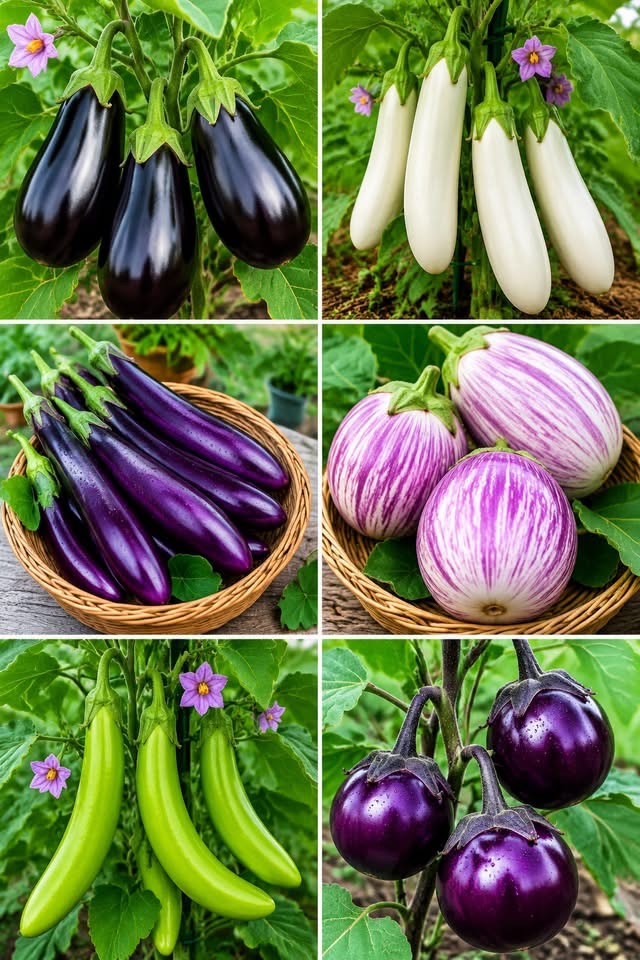
Organic eggplant cultivation is often framed as “difficult,” but in reality it is a powerful case study in how ecological thinking can outperform input-heavy systems.
Eggplants (Solanum melongena) are nutrient-demanding, heat-loving crops that respond exceptionally well to biologically active soils. In organic systems, the focus shifts from feeding the plant to feeding the soil microbiome — and eggplants reward that shift quickly.
A few principles have consistently stood out in experience and research:
First, soil structure is everything. Eggplants require well-drained but moisture-retentive soils. Incorporating mature compost, biochar, and stable organic matter improves cation exchange capacity and water-holding without creating anaerobic conditions. Biochar, in particular, acts as a microbial habitat, enhancing nutrient cycling over time rather than acting as a short-term fertilizer input.
Second, nitrogen management must be steady, not excessive. Overloading with fast-release organic nitrogen sources (like fresh manures) leads to lush vegetative growth at the expense of fruiting and increases susceptibility to pests like aphids. Slow-release systems — compost, worm castings, and legume-based rotations — create more balanced plant development.
Third, pest pressure is a systems signal, not just a control problem. Flea beetles and spider mites are common in eggplant crops, especially under heat stress. Instead of reactive spraying (even organic-approved inputs), integrated approaches such as:
• increasing plant diversity
• maintaining ground cover
• encouraging predator populations
• and using physical barriers in early growth stages
tend to produce more resilient outcomes over time.
Fourth, temperature management is often underestimated. Eggplants thrive between 24–32°C but become stressed outside this range. In controlled or semi-controlled environments, simple interventions like shade cloth, wind buffering, or thermal mass can significantly improve yield consistency without high energy inputs.
Finally, timing matters more than inputs. Transplanting into warm soil, avoiding cold shocks, and aligning growth stages with seasonal conditions often determines success more than any amendment or spray.
From a broader perspective, eggplants highlight a key transition in agriculture: moving from input substitution (replacing synthetic chemicals with organic ones) to system redesign. The latter is where true sustainability — and economic viability — begins to emerge.
For growers exploring organic transitions, eggplants are not just a crop — they are a diagnostic tool. If your soil biology, nutrient cycling, and pest dynamics are functioning well, eggplants will show you.
If they are not, eggplants will also show you.