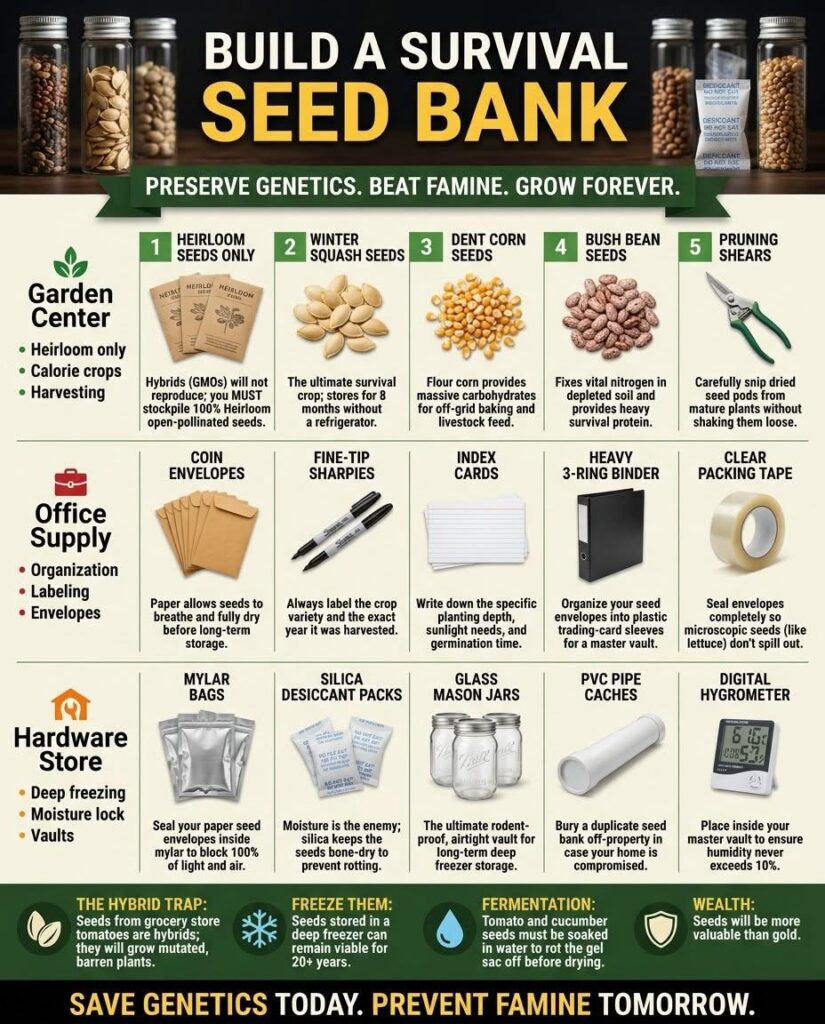
Build a Seed Survival Bank 🌱
In an uncertain world, one of the most practical things you can store isn’t gold, fuel or gadgets—it’s seeds.
A well-planned Seed Survival Bank is a living insurance policy: a collection of reliable, open-pollinated seeds that can help you grow nutritious food year after year, preserve valuable plant varieties and become less dependent on commercial supply chains.
The key is to choose open-pollinated and heirloom varieties wherever possible. Unlike many hybrid varieties, these plants can produce seed that can be saved, replanted and gradually adapted to your local climate and soil.
Build your collection around foods you actually eat and plants suited to your region. Good survival-bank crops include:
🌱 Beans and peas – productive, nutritious and relatively easy to save seed from.
🌽 Corn – useful for fresh eating, drying and grinding, but requires careful seed saving to maintain a healthy variety.
🥬 Lettuce, kale and other leafy greens – valuable sources of fresh food and micronutrients.
🥕 Carrots, beetroot and radishes – excellent root crops, although saving seed requires learning their flowering cycles.
🍅 Tomatoes – highly productive, with many excellent open-pollinated varieties.
🌶️ Chillies and capsicums – compact, productive and easy to incorporate into everyday cooking.
🎃 Pumpkins and squash – nutritious, prolific and capable of storing for months after harvest.
🌻 Sunflowers – provide edible seeds while attracting pollinators and beneficial insects.
🌿 Herbs – basil, coriander, dill, parsley and other culinary herbs add flavour, diversity and useful flowers for insects.
But don’t simply buy packets and forget about them.
A real seed bank should be alive.
Grow some of your seeds regularly. Learn how each plant flowers, pollinates and produces viable seed. Select seeds from your healthiest and most productive plants. Over successive generations, your collection can become increasingly suited to your particular growing conditions.
Store thoroughly dried seeds in clearly labelled, airtight containers in a cool, dark and dry place. Record the variety, harvest year and source. Different species remain viable for different lengths of time, so periodically germinate older seed and replenish your supply with freshly harvested seed.
Most importantly, share seeds and knowledge.
Swap locally adapted varieties with neighbours, friends, community gardens and seed-saving groups. A seed stored in one cupboard can be lost. A variety grown by dozens of people becomes far more resilient.
A Seed Survival Bank costs relatively little to establish, takes up very little space and can reproduce itself many times over.
It isn’t only about preparing for catastrophe.
It’s about food security, biodiversity, self-reliance and preserving something priceless for future generations.
🌱 Save seeds. Grow food. Share abundance. Protect the future.