🍎🥦🌱
Modern agriculture has dramatically increased food production, but it has also created an enormous dependence on herbicides, insecticides and fungicides to control weeds, pests and plant diseases.
One consequence is that small amounts of these chemicals—or their breakdown products—can sometimes remain on or in food when it reaches our kitchens.
These are known as pesticide residues.
Government food-safety authorities set maximum residue limits for individual pesticides and routinely test foods for compliance. Most conventionally grown food sold through regulated markets falls within these legal limits. But “within the limit” does not mean “completely pesticide-free,” and scientists and regulators continue to study the effects of long-term exposure, combinations of chemicals and the particular vulnerability of children and pregnant women.
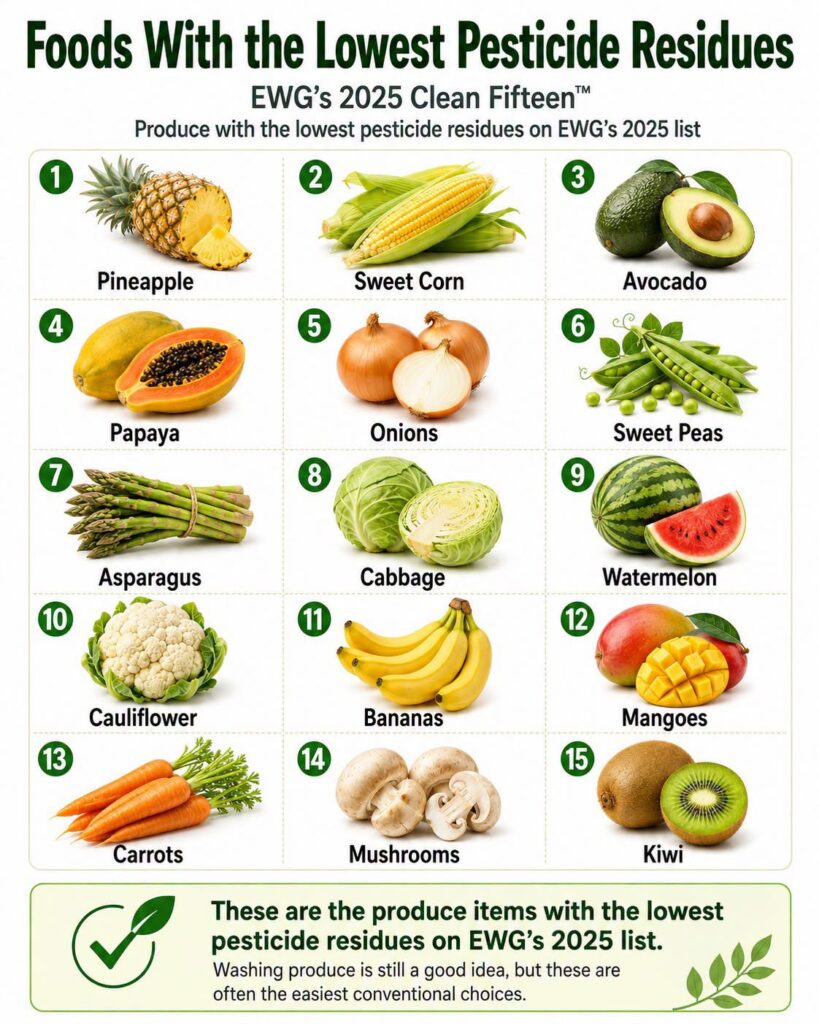
Which Foods Can Carry Residues?
Residues vary enormously according to the crop, pesticide used, farming practices, weather and time between spraying and harvest.
Fruit and vegetables may have residues on their surfaces, while some systemic pesticides can be absorbed into plant tissues and therefore cannot simply be washed away.
Pesticides may also be encountered through grains, legumes and other agricultural products. This does not automatically make these foods unsafe—the dose and actual exposure matter enormously
.
Can Washing Help?
Yes.
Washing fresh produce thoroughly under running water can remove dirt, microorganisms and some surface pesticide residues. Peeling can reduce certain residues further, although it can also remove valuable fibre and nutrients.
Cooking and processing may reduce some pesticide residues, but the effect depends on the particular chemical.
What About Organic Food?
Organic farming greatly restricts the use of synthetic pesticides, but organic does not mean no pesticides are ever used. Organic growers can use approved pest-control substances, and residues can also occur through environmental contamination or spray drift.
However, research comparing farming systems generally finds that choosing organic produce can reduce exposure to many synthetic pesticide residues.
Should We Stop Eating Fruit and Vegetables?
Absolutely not.
The established health benefits of eating plenty of fruit and vegetables are substantial. Fear of pesticide residues should not discourage anyone from eating fresh produce.
Instead, we can make sensible choices:
🌱 Grow some of your own food using organic methods.
🥕 Wash fruit and vegetables before eating them.
🍅 Eat a varied diet rather than relying heavily on a small number of foods.
🥦 Buy organic produce when practical and affordable.
👨🌾 Support farmers reducing unnecessary pesticide use.
🐝 Encourage farming systems that protect soil organisms, insects, waterways and biodiversity.
Growing even a small vegetable and herb garden gives you something increasingly valuable: knowledge of exactly how your food was produced.
The bigger question isn’t whether every trace of pesticide represents a danger. It is whether we can produce abundant, affordable food while steadily reducing unnecessary chemical dependence.
Healthy farming should protect the people eating the food, the people growing it, the soil beneath it and the ecosystems surrounding it.
🌱 Grow clean. Eat diverse. Support responsible farming. Protect the soil that feeds us.