
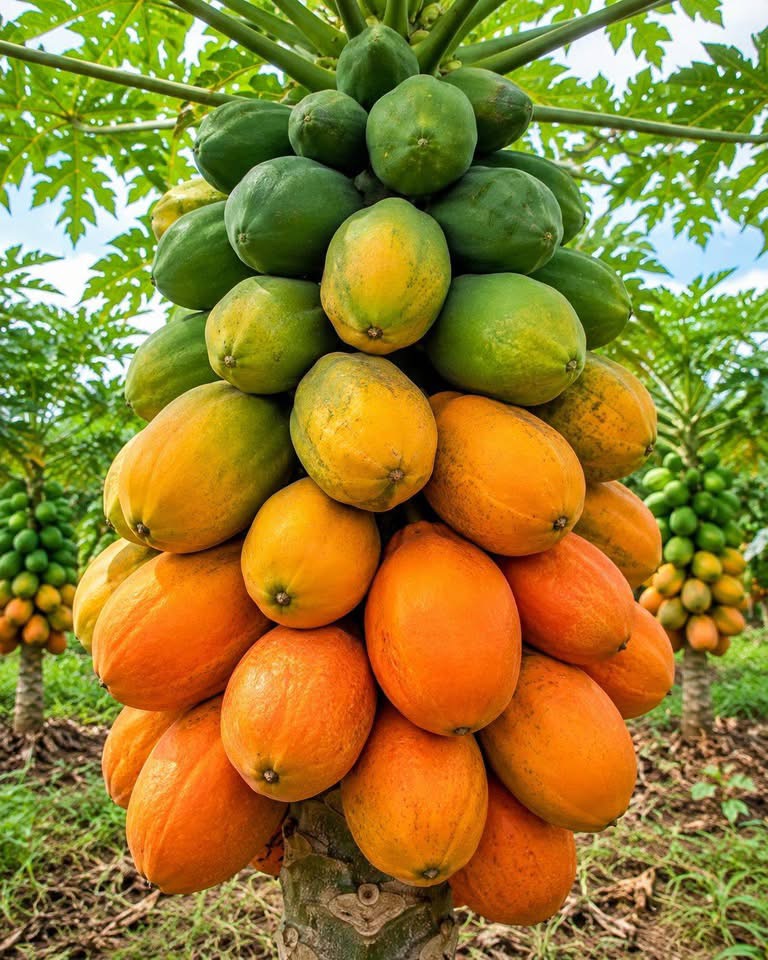
Papaya is a fast-growing tropical fruit that thrives in warm, frost-free climates.
Choose the right spot
Plant papaya in a warm, sheltered position receiving at least 6–8 hours of direct sunlight daily. Protect plants from strong winds, which can damage their soft trunks and large leaves. Papayas dislike waterlogged soil, so drainage is essential. In heavy clay, plant on a raised mound or bed.
Prepare healthy soil
Enrich the planting area with mature compost, aged manure and organic matter. A slightly acidic to neutral soil, around pH 5.5–7, is ideal. Healthy soil encourages strong roots.
Growing from seed
Seeds from a ripe papaya can be washed, briefly dried and planted in pots or directly into warm soil. Sow several because seedlings may develop into male, female or hermaphrodite plants. Male plants generally don’t bear fruit. Self-fertile hermaphrodite varieties suit small gardens.
Watering and feeding
Papayas grow rapidly and need regular moisture, especially during hot weather and fruit development. Water deeply around the root zone without continually wetting the trunk. Mulch with straw, leaves or grass clippings to conserve moisture, suppress weeds and feed the soil, but keep mulch away from the trunk.
Feed regularly with compost, worm castings, aged manure, seaweed solution or a balanced organic fertiliser. Adequate potassium is especially important during flowering and fruit development.
Organic pest control
Encourage biodiversity rather than routinely spraying pesticides. Ladybirds, lacewings and birds help control pests naturally. Aphids, mites, whiteflies and fruit flies can sometimes be troublesome. Remove badly affected leaves and fallen or damaged fruit, maintain airflow and use suitable organic treatments only when necessary.
Harvesting
In favourable conditions, papayas may begin fruiting about 8–12 months after planting. Pick fruit when the green skin starts turning yellow. Trees generally produce their best crops during their first few years.
Benefits of papaya
Papaya is naturally sweet, refreshing and nutritious. It provides vitamin C, vitamin A precursors including beta-carotene, folate, potassium, fibre and antioxidants. Vitamin C supports normal immune function, while dietary fibre contributes to digestive health.
Papaya also contains papain, an enzyme that breaks down proteins. Ripe fruit is excellent fresh, in breakfast dishes, fruit salads and smoothies, while green papaya is widely used in savoury salads and cooking.
Growing papaya organically gives you exceptionally fresh fruit while reducing packaging and food miles. Composting garden and kitchen scraps and returning them to the soil creates a natural cycle of nutrients.
With warmth, sunshine, rich living soil and careful watering, a few papaya plants can become a highly productive and attractive part of an organic home garden.